Categories
Monocategorized

Why We Work

I remember reading lots of emails with the super passive-aggressive opening sentence: “As you may already be aware…” Usually, I am not aware. However, I want to take advantage of that opening this week.

As you may already be aware, I did not succeed in writing a blog post on Sunday. This is probably the correct use of that opening statement. You may award me five stars on Yelp.

Instead of offering a miserable excuse for the delay, I am just going to write today and pretend that the delay never happened.

You will hear me frequently blibbity-blabbiting on the subjects of Hiring and Team Building. These are things I love to do. Today I want to talk about people’s motivation to work.

I always try to understand people’s motivations for showing up to work and doing their very best. That is the ultimate goal of the first five or six questions I ask people when I interview them. I think this is very important because your motivations for work are one of the big reasons some people get bounced out of the hiring funnel. I am speaking a little from experience here because one of my motivations for working really hard is that I have many mouths to feed and “getting paid” is a very important thing for me. I know this has been used to bounce me from the hiring queue in some places. “John is a family man with many children and is an expensive employee” is something that my spies have told me when I have been rejected from a role. I can respect that from some people, and from others who have had “the Silicon Valley exits”, I do feel a little hurt by it. I guess I managed to survive, but I do have a few professional acquaintances who I will avoid for this reason.

Another motivation for people is passion. I agree that there is a high correlation between passion and career success for a lot of people. I also think it is a huge false-negative filter that is costing many companies very talented candidates. I am okay with this because I have my own unique way of looking at employee motivations, and a subset of replacement motivations if they are not highly passionate about a work subject.

Wanting specific work experience is another motivation for people. I make the joke with some people that if you want a job at EA, you need to work three years at Activision, and if you want to work at Activision, you need three years at EA. I have been blessed with many opportunities that have let me create “gateway jobs” for people to explore careers in the games industry. Some people filter out candidates who do not have the required experience for a role.

I also think that people look at the size of a company. I learned late in my career that there are some big benefits to having at least one large-scale company as a previous employer. It is hard to qualify for some interesting jobs if you have twenty years of burning startups to the ground. Many human resources people just look at the shape of my LinkedIn profile and quietly throw up in their mouth—just a little.

The one motivation I like the most, and one that I think is not very heavily considered by a lot of hiring managers, is curiosity. I have written previously about how I will break apart an interview as a candidate as a part of my own process. I have not met many leaders who love that kind of behavior. I think that curiosity is among the most important qualities a knowledge worker of any kind can possess, and I love people who ask questions. Quite often this is a symptom of being a lifelong learner and helps people adapt to new roles and new domains. This is generally the one that gets me hired somewhere, so I have some real bias toward wearing my “I heart curiosity” t-shirt.

So when you are looking at a new job, you should always sit down and ask yourself what will motivate you to be successful. I see lots of people tilting at FAANG jobs where they broadcast stupendous pay packages. I also see lots of other people who shy away from some jobs because the company is in a space they consider boring. Whether it is a paycheck, passion, career experience, the size of the company, or just pure curiosity, you should understand why someone is interested in working on your team. It will help you to hire them and more importantly it will help you to retain them in the long term. It has helped me to identify people I would want to hire again and again.

This was a little late, and I want to thank you for your patience in addition to thanking you for reading along.

I am down to just a few more weeks of interesting posts. It is time for me to start reloading my monitor with Post-It notes for future conversations.

See you next week!

Categories
Monocategorized

On the Auth-er Hand

The past two posts were mostly about games I am currently playing. It is interesting to see that the World of Warcraft Holy Paladin experience was nerfed twice, and the general Diablo IV play experience is improving. I think there is some subset of grinders who will love Diablo IV when it gets a few more seasons of fixes, and that is all I have to say on the matter—the game is not for me.

I am going to get back to general engineering conversations. I am slightly nervous about doing so because I just realized that I am almost out of topics again. It has been a while since I have found myself in this state, so I will need to invest some thinky time in coming up with new things to complain about.

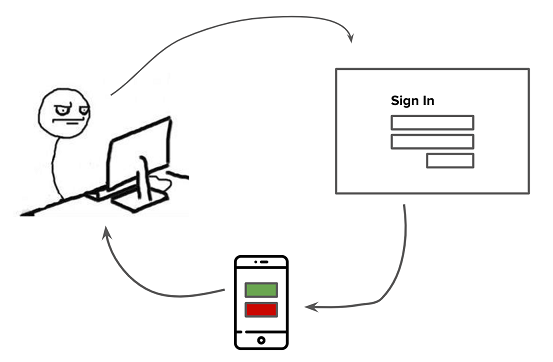
Today I want to talk about authenticity. Wait, no. I want to talk about authentication. Maybe a little bit of both actually.

Everything about online product authentication sucks. There are so many different ways to authenticate a customer these days, and almost all of them are a trap of some kind. I am ready to go into all of the different ways you can be your own Admiral Akbar, and decide which traps you do and do not want.

The first trap is the support trap. Many third-party auth providers give you libraries to integrate with their platform. The biggest problem with these is when the various Powers-That-Be make changes to their platforms and online stores. If you are natively integrated into an app store, for example, you might find that you will need to make an urgent update to your service or else run the risk of getting shut off for violating some privacy law or becoming a victim of some exploit. It is very frustrating to distract from core feature development for some problem created by someone else out there.

The second trap is the cost trap. Once upon a time, platforms were your friends in finding audiences. Today, they are a piece of expensive marketing machinery. Growth on the platform can sometimes “go viral” if you do it right, but that is a serious case of someone trying to make fetch happen. Many times it comes across as totes cringe. You will spend advertising dollars on these platforms to find customers, and most of the platforms are vicious red oceans at the moment, which implies that the dollar value will be high.

The third trap is the relationship trap. Sure, you will reduce some friction by having an easy button to integrate with Facebooks and Twitters. I suppose it should be Metas and X’s, to avoid a little “well, actually…” The best products I have seen have built deep relationships with their customers—making sure you have a vital path to marketing to your customers is very important. It is a lot of work to ask for people’s email addresses, and most platforms increase the amount of friction for software developers to access this information because they want to keep their audiences inside of a protective moat.

Related to the relationship trap is the knockoff trap. Because you are partnering with a platform for authentication, they will have some bored product manager somewhere who looks at authentication data and if you are sitting on bottled lightning, they might make an argument to compete in your space, either by acquiring a company or building a product from scratch. You can see the Instagram acquisition or the launch of Threads for some examples of this. Apple and Google are also guilty of this with more or less degrees of success.

Using other authentication providers does come with some benefits. It does make your marketing easier to execute, and it does reduce friction for potential customers. It might take some work off of your plate when you are first building out your service, too.

There will come a time when you will have to look at your long-term strategy and decide that having a more direct relationship with your customers is really important. Many of your authentication partners may wish to stay in the middle of that conversation and attach friction or cost to it.

The other issue is that friction is very harmful to new product development. Building relationships with people on the internet is difficult, and leveraging a trusted authentication partner can be a good way to get some early customers into your service.

In the process of writing this article, I searched for the words “consumers” and “users” and replaced both words with customers explicitly. It was interesting how many times each appeared, and how differently this whole post reads when thinking about customers.

Many of the platforms today that authenticate customers are in the marketing and advertising business and have leveraged colossal amounts of venture funding to buy their way into everyone’s heads. They live there mostly rent-free for customers. Someone somewhere will have to pay for that and unfortunately, that is you and me.

This is one of the reasons that Tim Sweeny is my Games Industry Person Of The Year, every single year. He has done a phenomenal job of ensuring Epic Games has deep relationships with developers and players alike and built a great emerging ecosystem. I also have some mild ideas about how web3 will become more meaningful for long-term player identity, but there are other problems that web3 will solve first.

Writing this post was a struggle. I am conflicted about the ease of leveraging high-scale platforms to jumpstart a customer base because it can “cheapen” your relationship with your customer, and also it erodes a sustainable competitive advantage. I think there is a time after you have found product-market fit when leveraging platform partners and third-party authentication makes sense, and I think that it is something that needs to be done thoughtfully. Most people just dump a generic auth provider in front of their potential customers and hope for accidental long-term success. I am sorry if I offended you with this statement, and in the immortal wisdom of one of my favorite eighties musicians… maybe you needed to be offended.

I tried to create a link to the artist and the album in question to make zero million dollars in affiliate fees, and I was told that there is an error. Maybe my time as Amazon’s worst affiliate marketer has come to an end. I had a good run. I have zero regerts.

I will see you all next week!

Categories
Monocategorized

Genrecide

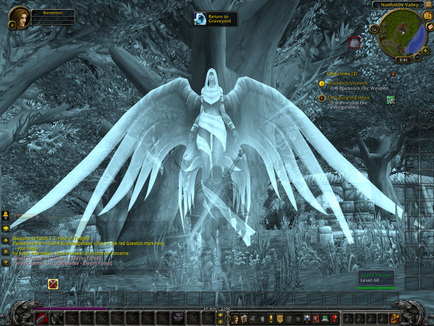
The alternative title I was considering for today is “only MMOrders in the building.” Today I am going to talk about World of Warcraft. I do not have very kind things to say about World of Warcraft, and I feel a little guilty because they finally fixed my favorite class and spec (Holy Paladin) after seven years. I am actually really enjoying healing at the moment, and unfortunately, I have been planning on dunking on this game since June.

Ultima Online was the game that convinced me I should become a professional game developer. I am humbled to have met many of the key people who brought this incredible product to life, including Raph Koster, whose game I am eagerly awaiting, and Richard Garriott, whose Ultima IV game was probably one of the most influential games I have ever played. 

Ultima Online was a wild sandbox game. The violence between players was so intense that you could not really call it PVP. It was called Player Killing (PKing) because it was so savage and abrupt. At the same time as being a deep, deep pool of violent online despair, it also had shining moments. I was briefly a homeowner in the game on a choice piece of island real estate, I was an elected mayor of a player town, and one of the people I met in the game early enough found my behavior so entertaining and “in character” that they could have sworn I was running an in-game event.

Early Ultima Online was really special to me. While there were a lot of exploits and bugs in the game, there were also some fantastic people forming communities and having fun together.

I was privileged to meet a handful of people who were also interested in game development and could see the promise of persistent world games and letting players shape the future of their games.

I was also part of a great mailing list called MUD-Dev at the time. Its administrator was an amazing gentleman who curated a community of craftsmen and theoreticians who were the progenitors of today’s large online games.

While I was going through the polite fiction that I could bootstrap an MMO into existence, or somehow figure out how to raise money, I had no idea that the whole category of games was going to get hit by a truck.

That truck was called World of Warcraft.

Do not get me wrong. World of Warcraft (WoW) was a great game. It still is today. While I did not play it at launch because I was running a startup at the time, I did manage to get into the game during its first expansion, and I absolutely understand the charm and the appeal of the game.

In fact, I still play this game today. I fully intend to stick around to see the day that Blizzard creates its own black swan event and blows the whole game to pieces. It almost did during the Cataclysm expansion and also people had a tremendous amount of rage for the Shadowlands expansion, but the game has endured. You could almost forgive them for what happened in Shadowlands. Between world events and the issues happening at Activision-Blizzard, it was a rough time.

So why am I so butthurt about WoW?

It is because the persistent world sandbox approach to MMOs got brutally murdered when this game went live.

So what does that mean?

The first generation of MMOs had some really wild stuff in it. There are some interesting stories about how they took out the simulated ecosystem in Ultima Online because the real point of creatures in MMOs is to wander infinitely until some PC comes on screen and decides to turn them into experience points and skinned corpses. Asheron’s Call had some neat dynamic dungeon experiments that were fun, even if the game failed because none of us knew what the flying shit an Olthoi was.

World of Warcraft did a lot of things to put players into amazing quests, participate in cheeky stories, and group up into groups of five-ten-fifteen-forty adventures to do some kind of quest…adventure…instance…thing.

In addition to giving people interesting group activities, WoW put people into instances so they could do their content with their chosen team in private. This is one of the places where the game breaks down as an MMO for me.

The other place it breaks down is that ultimately nothing the players do affects the world. Ultima Online was turned into a giant player-owned slum, but it was our giant player-owned slum. Sure, one person gets to be the Scarab Lord, but that is scarcely enough really cool world persistence, especially when the winner of that title decides to delete the game.

Regardless of my opinions of how this really is not an MMO, the game is considered the top-performing MMO game by everyone else— and given the volume of sales, is it any surprise no one really cares?

I mean, when I bought the game, I remember picking up a copy of the box with a sticker that said “Over five million units sold!” Right beside that box was a box that said “Over three million units sold!” and “Over four million units sold!” The game was selling so fast that they had to reprint new stickers. It was a surreal moment to be sure.

The problem now is that WoW created a one-hundred-and-fifty-million-dollar technology mountain that everyone needs to climb in order to be considered a competitor in the category. This is kind of important. I did some research on replicating a billion-dollar mobile franchise that I admire. I am not the first person to do so, and I certainly will not be the last.

I decided to peel back a few layers of the Summoner’s War onion to see what it looked like at launch. If you had to knock off the game today, it would be a ten-million-dollar product. About sixty to seventy percent of that is stuff they added to the game after they found out they had a hit. Once a game becomes live and develops an entrenched fanbase, it erects massive moats to competition through live operations and iterations on elder play.

WoW is in that spot right now. If you wanted to make an MMO today, the amount of stuff you have to pile into the game is being measured against your friendly “kill ten bears” genre champion.

That sucks terribly because nothing that has happened in the game has enriched the category of MMO since 1998. Arguably, it has substantially backslid as an actual MMO. We are still in “MMO 1.0”. The only game that has stretched the genre at all in my opinion is this inscrutable space game called Eve Online that is so obtuse that it boasts of two insane features: First, it has a product integration directly into Microsoft Excel. Second, when you get run over by another player in this massive player-vs-player zero-sum game, the total loss of your ship is so horribly broken of an experience that they boasted at a game developer’s conference that their solution to this is to flag a live operations specialist to help you through your loss and keep playing. If that sentence sounds terrible, it is because even typing it hurts my brain.

If anyone is confused at this point because I am not writing about engineering leadership or mentorship, I do apologize to you. I do have some posts queued up that fall under those categories. I had some kind of obligation to shake my fist at the clouds over two games, and school is still out for summer. My career touches on the games industry from time to time, and I have been paid on more than one occasion to participate at the edge of online games innovation.

Despite collecting some dribs and drabs of coin, I have not yet made a real dent in online game innovation. To be honest, hardly anyone else has either. We have found many more ways to get up to 100 people into a single room and hand them badges, points, and even umbrellas. In WoW, putting 40 people in the same room made everyone tired. They never desired to be as cool as Fortnite. The latest set of instance changes do nothing to give players serious agency in the world. Even the way that the NPCs talk to you reminds you, as the champion, that you are really not playing together but merely playing with yourself. Maybe we shouldn’t repeat that out loud.

After the first decade of “not seeing anything interesting in MMOs”, I have stopped hoarding my late 1990s ideas. Some of them are interesting for niche games, and some of them would be exciting to see operating at scale. At this point, I would just be happy to play a multiplayer game that was as meaningful as Ultima Online felt so many years ago.

So there you have it. Once again, I have sprayed so many words that I am not going to go viral on TokTok anytime soon. I thank you once again for reading along, and I will resume my regular posting of mentorship things and links to affiliate merchandise that no one ever buys. If you do not feel like buying any of the random crummy things that I link to you for affiliate fees, I did write a collection of short stories once while commuting on a train. One of them might even be good. I do not collect an affiliate fee… from myself… if you choose to buy it. You won’t anyway because I am not that good at reverse gaslighting. 

I shall see you all next week!

Categories
Monocategorized

Diablo IV is a beautiful stupid game

Warning: here be spoilers.

I finally finished Diablo IV the other week. I finished the game with my own definition of “finished”, which to me means to complete the campaign. I did the same thing with Diablo III. I know some people believe that “finished with the game” involves getting to level 100 with every character and doing all kinds of other crazy things. I can respect that. That also was closer to my definition of “finished with the game” for Diablo II.

I consider Diablo II to be one of the better games I have played in my life. It is a magical product, and it got many things right. I have replayed it recently, and it largely holds up to how I remember it. Ultima IV also does this. It is another game I am willing to replay from time to time to respect its majesty.

Diablo III was unfortunate when it launched. I played it. I understand what they did with it. I did not love it and moved on to other games. That is the entirety of my thought process about Diablo III. I did not love the story in Diablo III. I apologize if this is spoilers, but the ending is functionally equivalent to “Cabin Boy”. I heard from many people that Diablo III eventually became a fun game and I cannot say how long that took, but to me, that kind of transformation in a game must happen before you launch it.

That brings us to Diablo IV.

Diablo IV is a very beautiful game.

Diablo IV is also a very stupid game.

I have caught flack from one individual for giving this game a 6.5 out of 10. Many other people feel I am being far too kind. Aesthetics carries this game very far, honestly. I can respect the craftsmanship that went into making this such a beautiful experience.

I want to say that I have a large number of questions about the mechanics in the game, and the deep truth is I only have one.

Did anyone with any decision-making power play this fucking game?

Where do I start with my critiques?

I think that the auto-leveling of the world is the first one. Diablo IV leveling is a tedious chore. It is like mowing five acres of unkempt lawn while eating a bowl of oatmeal at the same time. God help you if you picked a class that you thought might be fun vs just listening to all the people on the internet and loading up on a broken OP character. Your gear becomes ineffective at an incredible pace given how infrequent replacement items are. Eventually, you will get one or two epics that have some great aspects on them that you need to maintain to overcompensate for the continued state of decay on your build. You can strip the aspect off of your items and reapply it to a higher-level item. This is a one-time fix. You cannot reapply that affix to a different item, which is not something that is well communicated upfront.

In other games, if you ever fell off of the power curve, you could go back to old areas and upgrade your character. Most every game I have played has had this as an option. In the best games, you will achieve a state of flow while this happens. Because everything is constantly leveling up, you are afforded no such luxury in Diablo IV. A bad character build will continually remain bad and will eventually bring you into a spot where you will be powerless to progress.

There are a few higher-level zones where you can fight some bosses and clear out a part of the map. I encountered the first one of these at level 19. After dying repeatedly, I discovered that I should push my character to level 20 and go purchase a potion upgrade. The four levels before a potion upgrade (levels 20, 30, and 45 respectively) are terrible. They are made worse because you know there is an arbitrary upgrade to your potions coming because number.

The other rage-inducing random decision for character progression is tying your potion count to how much extra side questing you have done. Before going into the game’s final act, I ran around the world picking up side quests and waypoints that were totally unnecessary to get to an arbitrary magical unlock threshold to increase my potions.

What the hell is a Murmuring Obol anyway? I was running around at maxed-out Obols for more than half of the game because I did not realize that this is a special currency for gambling, vs gold. I am not sure why it needed a special currency for gambling, or why it had such an insanely low cap of 500, which forces you to go and spend currency when you might want to bank it up to desperately try to replace really outdated items.

Dungeons are the next thing to talk about. I cannot complain too much about dungeons. I decided to stop doing them because I accidentally wasted a lot of time in them, mistaking the first few for the one-floor cellars that populate the terrain. The complaints that I perceived, and were largely validated by talking to friends, is that all of them share the same repetitive structure and mechanics.

This is also the problem with the boss fights.

I vaguely remember the boss fights in Diablo III, I had no real issues with them. I greatly remember the bosses from Diablo II as being interesting, varied, and challenging.

Diablo IV bosses are just boring. They mostly have the same mechanics, and if you are playing as a Barbarian, you spend a lot of time just running around dodging red shit on the ground while waiting for your cooldowns on your powers to expire.

Another challenge for the boss fights is that the boss arenas are tiny. It is made worse by the fact that the final boss fight area (SPOLIER ALURT) shrinks over time. Someone thought this would be a good idea.

Clearly, there are a lot of mechanical deficiencies in the game. They are buffing some of the classes and making some adjustments to “end game” because they know they have some problems. There are also clipping issues with horses and terrain that are being addressed. I heard that some people got stuck at level 50 before finishing the game (I finished at level 49), and that you needed to do some crazy hard-mode things to keep progressing in levels. Much like so many other things, that feels so arbitrary.

I am glad this game will eventually be fun for the people who decide to stick around, in much the same way Diablo III became fun for people who stuck around.

For me? I don’t know. This might be the last Diablo product that I pay for. I am not planning on sticking around to see it.

I got sucked into Diablo II hard because it was fun from the beginning. The story was captivating, and the whole thing just worked. There is a certain gestalt in an amazing product that you can feel. In hindsight, the one criticism I could level at it is that the game could be called “ZOMG SO MANY POTIONS”, because you do need to get your drank on to win the game. Back when it came out, I had to step out of the boss fight and go farm for gold and drops to rebuild my potion stash to get the boss down. It was a little unfortunate, and somehow it was still immensely fun.

The real criticism I have for Diablo IV I saved for the end. It is a fucking. Stupid. Story.

There are going to be some more spoilers here. If you are concerned about such things, you should probably stop reading.

The game starts with your character rescuing a bunch of villagers. After you rescue them, you have a party where they give you a drink that is drugged and you black out. After breaking free, you go find someone named Lorath… The very first thing you do is accept food and drink from them? Did we just forget what happened ten minutes ago?

Hard pass.

Setting aside the amount of drinking that you and the NPCs do, I could not identify with most of the decision-making in the game up to the end. Watching the final scene, I was reminded of all things from an episode of The Simpsons. This is not where I wanted to be at the end of the game. Of course, very few games stuck the landing as hard as Diablo II did. If you did not go through the OG game before, it is well worth your dollars to play it through now.

Another criticism for me is the mechanics of the story. Yes, you heard that right. They added a mechanism to the map to watch cutscenes that moved the story forward. You constantly found these piles of clearly marked blood petals that would let you move the story forward. The idea to tie these visions to the mechanics of the game felt alien to me. I could literally feel the shattering of the fourth wall every time I saw them on the screen.

Speaking of shattering the fourth wall, this brings me to my final criticism of the game.

The always online connectedness of the thing. I had one game-breaking crash in the wee hours of the night when I committed to finishing the game. It was in a dream-sequence quest that I had to restart from the beginning. This was an awful experience, and unfortunately, it felt par for the course.

That does not compare at all with the disruption of seeing a tricked-out character named b0ngBrUhl33t666 go tearing across the map while you are deep in the throes of battling for the citizens of Sanctuary.

So there you have it. At the end of the game, I felt like I bet on the wrong horse—or wolf. For more than half of the game, I actually felt that a team-up with Lillith might not be so bad. When asking myself what that ending would look like, I remembered some sage-like wisdom from Logan V. What is curious to me is that more than half of the people I talked to about this game also felt the same way.

Thank you for reading along. I really hope this game becomes the game that everyone who worked on it wanted it to be. I do. Right now, it is not a game I feel good about paying for.

See you next week!

Categories
Monocategorized

Me learn gooder

I have a fancy curved 49” Samsung monitor on my home computer for evaluating products for professional reasons—or as my wife calls it: “Playing games”. It is nice because I have a row of Post-it notes at the bottom for potential subjects to write about. This week, I have a note that says “Split PDF Learning Style”, and it took me about an hour to remember what that meant. Note to everyone: “How to remember gooder” is a future conversation. I had some trouble remembering this week’s topic for a second reason: I wanted to write “Why I think Diablo IV is a stupid game.” I am going to complete the story mode before I shake my fist at all of you teenagers and explain why I think this game is the last Diablo game I am going to purchase. If the game graces me with a good ending, I may recant that position.

So what the hell is a split PDF and what does it have to do with learning styles?

I may have mentioned once or twice that I play World of Warcraft. I run a late-night raid guild (always recruiting the ranged dps!), and treasure the start of each new tier when we enter the new raid.

Every raider prepares for the raid differently. Some people watch a lot of videos. Some people read all of the strategies on the web. Some people wait to show up and get an explanation from the raid leader.

One thing we do each new tier is that we blindly pull each boss once. This means there is some subset of our team who has no idea what to expect at all. Especially me. I learn best from experience, and this is one way to really get into it very quickly.

Yes, I am an experiential learner. I struggle to learn by watching videos, and I can kinda get the gist of things by reading the strategy guides. I learn the best by jumping in and doing things. When we want to discuss ideas or develop products, I am the first person to want to workshop things and make some prototypes.

Which brings us to the PDF.

For some strange reason, ADOBE winds up winning so many of the format wars. From the decades of horror and “punch the monkey” banner ads, Adobe Flash was one of the default standards for web content creation. Much like the fax machine, that died a much-needed death a long time ago.

PDF is starting to feel the same thing to me.

We get a lot of work documentation in PDF format and trying to make sense of it can be like trying to figure out the color of a cupcake by licking it.

PDF documentation needs to have some better web viewing modes that are not “print this out on paper like it is the 1980s”. On a widescreen monitor, there are a bunch of settings you can tweak in your browser or PDF viewer to make the document marginally more presentable, but the inability for PDFs to be really viewable on the internet is probably why people pay for Atlassian Confluence. As an aside, I will save my rants about Confluence for another day.

Creating and sharing documentation is a fundamentally important task for making excellent software. It is a poor craftsman who blames his tools, and I will wear that “I am a poor craftsman, and all I got for it is this crummy t-shirt” proudly while I point the finger and sneer at the PDF format and its current dominance in documentation formatting.

We are all doing our very best and this is one of those things that I glare at and think “Do better”.

I love it when I see developers, product managers, designers, and customers achieve shared understanding expressed through great products. Sometimes the path to that greatness leads us through difficult journeys and attempts to teach how to use that product that needs 17th-century “here be monsters” warnings. If you have some preferred formats for sharing product documentation in the “not PDF” bucket, my DMs are open, and my inbox is waiting.

Thank you for reading along. I do have a rant about Diablo IV coming. I also have a long conversation coming about World of Warcraft. The latter post is going to wait a while. This last week Blizzard returned the Holy Paladin play style to the way I like it after many years, and I am not ready to assume the guilt of shitting all over them after they made the game fun for me again. They Made Paladins Great Again, and I hope you join me in ordering some sweet, sweet Paladin merch to celebrate this occasion. An Amazon-affiliated link is here for you to not click on.

I hope to see all of you wonderful people here again next week.

Categories
Monocategorized

NO-gotiating

I am back after an unplanned extended absence. After a multi-week trip to Europe, the first real vacation I have taken in a long time, I was blessed with having my oldest son home for a little extra time after his college year ended, and before his new residence was available. This meant that Dad’s home office was not available during my usual writing hours. I chose not to try to fit the square peg of “writing time” into the round hole of “the rest of the day”, and thus, you have all been starved of my brain leakings.

I have a row of Post-it notes on my monitor as prompts for my weekly writing. The last one I wrote was during the height of the House budget crisis. There was so much partisan spin on both sides of the aisle about what was happening that I was getting dizzy reading the news.

I am not going to issue any red-tinged or blue-tinged opinions on the outcome that was eventually reached. I am going to talk about the process to get there and the negotiating that barely happened.

I am fond of telling people that there is a very good book on negotiating out there called Getting to Yes. It was an excellent read to help you think about the different ways to negotiate, the way that you negotiate, and most importantly, the way that people negotiate against you. After telling people to read the book, I often tell them that learning the different negotiating styles taught me to essentially ignore the advice of the book and the notion of principled negotiation.

I remember having a contract negotiation with a friend of mine for some development work about a decade ago. We went front and back a few times before the contract was ready to be signed. When we reached an agreement, he noted “You must have had some really bad experiences with your contracts to require so much work in them”. On the contrary, making sure that everything was spelled out nicely in the contract helped to ensure they were all very seamless.

The only deal I really did not negotiate was the first one I ever signed, and that was mostly because the people who sent it to me, in all of its eighteen-page glory, said it was a mere formality and really did not mean much. I worked with this company for the better part of the next two years without thinking much about it.

Around that time, my first son was born and I became a parent. Setting aside all of the excitement and positive emotions of that experience, I experienced a step-function increase in my cost of living. I communicated this to the primary mobile game publisher I was working with as we were coming up on the end of a six-month contract.

The problem was, the more I mentioned that we needed to discuss the next steps in our relationship, they kept delaying a conversation on terms. Finally, in the second last week of our six-month contract, they sent over a contract for one year with a lower monthly amount than the current monthly amount which I had told them was not enough considering I now have extra costs.

We scheduled a phone call for later in that week where their VP of publishing tersely asked “Look, do you want to be in business with us or not?”

I sighed heavily and said “No”, and we ended the call.

I do not think they were ready to hear that, and they were pretty angry at me.

In the final month of not negotiating this agreement, I had a lengthy conversation with some people who worked at a competing publisher. They offered me a much more flexible contract for twice the monthly amount as the first publisher.

I did not know this at the time, but this is referred to as a BATNA (Better Alternative To a Negotiated Agreement). I teach this word to lots of people I mentor because it is a very important thing to have, and it is a powerful concept.

Most developers are super shitty negotiators. I know that I was. I was accidentally a great negotiator a few times in my life leading up to this moment and now I understand why:

I was willing to walk away from the negotiation completely.

Whether you are negotiating a job, or negotiating contract work, most developers have some sort of really strong desire to sign the agreement. This is a really dangerous tendency because if you are negotiating against a hardball negotiator, this will be leveraged against you.

We saw this play out in the House budget conversations. For the longest time, there was a lot of “not-negotiating” going on, or as I like to call it: No-gotiating.

It is super important to know what you want out of an agreement when you enter negotiations and what you are willing to give up. I developed a reputation as a hardball negotiator for jobs because I am a family man with a very high cost structure due to having kids. I have had to patiently explain that to a lot of people who somehow think you can share a three-bedroom in the bay area with four kids, or wait until your end-of-year bonus in order to pay your rent. I am also super grateful for the companies that understood that and were willing to be flexible on terms in order for us to do great things together.

So where does that leave us?

It is really important to make sure you understand what you can and cannot negotiate. I have helped some people add both cash and other considerations to their various negotiations over the years. Many of them were shocked at what they received by stating their position and giving some room to adjust terms. In some cases, where there was very little flexibility in dollar amounts, a few people have gotten formal reviews scheduled into their job offers or contracts where they received bumps in pay at the six-month mark as the very last thing they could have added in order to have their consideration re-examined.

Recently I have talked with people after they accepted an offer that had a lot of room for improvement. They admitted that they figured if it was not enough, they could always ask for changes after the fact. That is hard to do once you have put your name on that agreement. Sometimes it is hard for a company to do that due to its size, sometimes it is hard to do that because you do not have any leverage to request those changes after it has been fully executed.

If anything, I hope that this encourages people to make sure they are getting what they want in an agreement before signing it. You might be wondering what are all of the moving parts that you can negotiate. Goodness me, look at the time. We will have to go into all of those things at a later date.

It is good to be back, I really missed writing for you all. Please feel free to Socials this. Retweet. Re-mastodon? Re-Thread? Whatever it is you do. Also, feedback is a gift and I love presents. Please comment on this post, email me a note, or fax me your impressions.

See you next week.

Categories
Monocategorized

Back-ish

I am back… Sort of. After a two-week whirlwind tour of Europe with my recently graduated son, I am once again in front of my computer. I have a small list of posts to make, but I apologize to all of you because today is not the day I resume them.

It is Father’s Day. I have also spent two weeks not playing Diablo IV. Today I am going to fix that.

I will see you all in hell!

Categories
Monocategorized

See you in two weeks

Cheers!

Categories
Monocategorized

Sale Away!

The nice thing about the suburbs I live in is that we have a community garage sale weekend. That means that today everything hurts for me. Dragging all of my unwanted junk into the blazing sun early in the morning and then dragging what didn’t sell back into my garage six hours later has left me regretting all of the years.

I do confess I love doing garage sales. There is a fine art to figuring out how much everything is worth and what someone will pay for it. I have figured out the science of what price you want to put on the sticker, which is not the price that someone will pay for it. You will want to add two to five bucks to most items. You will have many people come up to you with an item with a seven-dollar sticker on it and ask “Will you take five”?

You also need to think about where to put everything. It is important to put some of the really nice items upfront in order to entice people to stop. I do feel a little sad when a vehicle slows down and the driver gives the contents of our drive a once-over, only to decide not to stop. Hashtag Sadge-Face.

Something I also like to do is to put a bin of colorful toys right up front. This bin has a “fifty cents each, or three for one dollar” sign on it. This has two effects. The first is that any kids who come along have a few moments to dig through the bin, giving parents some time to look around and decide if they want anything. The second thing I learned from Disneyland. Kids love anything noisy or shiny. Disneyland will funnel your family through a store after just about every ride, so you can be graced with the screams and tantrums of your kids and others. I always wondered why parents paid money for ridiculous toys and merchandise at the park. Now I know that it is a shakedown in order to purchase silence and appeasement. I am not a proud man, and I shamelessly took this tactic into my garage salesmanship. I only made about five bucks off of that this week. My guess is that the lack of kids going around the community garage sale this weekend means that the parents around here have figured out that this is one of those times to leave the kids at home.

So what does this have to do with anything?

First, I am sore and tired from the experience, so this is kind of a placeholder article for the week.

Second, there are some takeaways from this. Pricing matters. I do not think there is a “this-is-seven-will-you-take-five” system out there for digital goods. There has to be some kind of interesting system you can build to motivate the value-shopper systemically instead of manually running sales. Pricing also matters in other ways. When bidding on work projects, you sometimes have to negotiate with other people on the number of hours, billable rate, or features. I have had a few project proposals go south over the years because I would put out some numbers that did not have a lot of room to negotiate, and the other party was attempting to change the price. In many of those cases, I simply had to walk away from the project.

In addition to pricing, you also learn a little about product placement. What do you put in front and how do you arrange everything? I had a pair of benches for sale that I had covered with a number of items to make them easier to see and reach. The person who bought them had to ask me if those benches were really for sale because I had a bunch of stuff on them.

I suppose this is one of those things that is very “suburbs-ey” of an activity. I had some fun with it this weekend and I recommend it as an interesting educational activity. There are also some feel-good moments. One lady was buying toys at a bargain to send to kids overseas. I told her to help herself to a pile of them. It is also a nice moment when you see a kid find a toy they really want to have, and the parent spots a few extra things they want to buy. I feel good because it gets stuff out of my house. The kid feels good because they got a new toy. The parent feels good because they bartered a little to get the price down on a bunch of items. Win-win-win, if you ask me.

See you all next week!

Categories
Monocategorized

Career-view Mirror

I occasionally look at my LinkedIn page and attempt to envision it through the eyes of someone who might be wondering whether or not they should hire me. It has some rough parts, for certain. Many people would take an eight-month executive role and remove it from their work history, for fear of what someone else would think. I explicitly leave that role in there for two reasons. 

The first reason is that it is a screening mechanism to remove people who rush to summary judgment without all the facts. The second reason is that it is an important conversation for me to have with a potential boss. They need to understand that some things are complete non-starters for me.

I bring this up because I am having conversations with people about career planning right now. The various places I have worked and the various roles I have held have all been tremendously educational. I have a great role with an awesome team at the moment and I am doing my very best to impart some wisdom to a large number of people on how they can achieve the same thing, eventually.

Part of that process includes avoiding some of the rough patches I have experienced and trying to distill some of the hard lessons learned along the way to help prepare people for future roles.

This is harder than it sounds.

I have flip-flopped between individual contributor roles and senior management roles over the past ten years. Popping the clutch professionally like this is hard and frustrating. I do not recommend it to anyone. It is why I spend some time going over five-year plans with people. It is important to see where you are now and determine where you want to go. It is also important to create a plan to get there.

Some jobs I have taken (and consequently abandoned) were part of a five-year plan. I try to make light of the fact that my five-year plans change every three years. Market conditions, family issues, and company peculiarities often create complications. I tip my hat to those of you who have celebrated ten-year anniversaries with their employers. I have no idea what that must feel like.

I am now at a point where I have checked off several big items on my professional bucket list. I have a few items I wish to complete and also a few items I have removed. Given what I have learned in the past two years, I do not wish to run a crowdfunding project. That is a small example of something I wanted to do professionally and have removed from my bucket list for a variety of reasons.

My goal with this post is to talk more about the journey than the destination. My LinkedIn profile has too much in common with the poem Ozymandias for my liking. I made many career decisions as a reaction to something else happening. I do not regret these decisions or the circumstances that necessitated them. I am mindful of using them to help shape the careers of people at an earlier stage in their journey than I am.

As your eyeballs absorb the photons emitted from the screens graced with these letters, I urge you to think about where you are going with your career and what your five-year goals are. You should also contemplate how often you change them as you approach double digit years of career experience.

If you are struggling to figure out your goals, I am more than happy to spend some time answering questions for you, or more importantly, asking them. This is a conversation you should have sooner rather than later. There is a remarkable increase in individuals, companies, and platforms offering mentorship services. As I sit down and help some people in a mentorship capacity I find myself fighting off feelings of envy. There were a few frustrating times in my career when I was having a professional dilemma and could have used some external words of wisdom.

This is only fifty percent a sales pitch—okay, maybe sixty percent.

Go look in the mirror and ask yourself where you expect to be in five years. If you know where you are going and have a good plan to get there, awesome. Five stars. I am excited to hear that you have a good plan! If you do not know where you are going or are not sure if you have a good plan to get there, maybe it is worth finding someone to give you an external perspective. Coaching and mentorship are valuable services and will help take some of the uncertainty and reactiveness out of your career journey.

I know I sure could have benefited from it.

Sorry for the lack of a snickety-snarky close this week. I hope to see you all again next week!