I finally watched “TRON: Ares” over the past five days, and kept falling asleep and having to restart it. I suppose I should be grateful that I accidentally found it available on Disney+ for free. I have clicked on the movie at least once a week since it became available on demand, with a ridiculous “Buy Now for 19.99” right beside “Buy A TRON Bundle for 17.99.”
I also have about three more weeks of this for “Wicked: For Good.” Yes, I am going to watch it. It is as culturally relevant as the new TRON movie, but it has the correct amount of Jared Leto in a movie for me.
This goes beyond “something something Disney.” HBO Max pooped out the worst finale for a tv show in the history of the universe with the end of Peacemaker Season Two, and then politely emailed me that my rates were going up to that mythical 20 dollars a month. If you want some free life advice, do not ask for money right after you shit in someone’s living room. This is the first time I have unsubscribed from a streaming service, and it will not be the last.
I signed up for Peacock for 1.99 a month (with ads) last year, and when I went to cancel it before it went to regular price, they gave me an offer to resubscribe for 2.99 a month for a year. I could have waited until Black Friday and seen if they would have given me the same deal, but I am not going to fight them for a dollar a month. This is where my SNL is at, if nothing else.
Why are these movies so expensive for so long at home? Is it tariffs? Did the streaming people test the length of the pricing window to optimize revenues? Or maybe it’s tariffs?
I don’t know, but I am getting pretty sick of it. You might find this hard to believe, but I have never pirated a movie in my life. I work in intellectual property, and I do my best to respect its value.
Last week was the first time I thought about it, though… I was not so much excited for TRON: Ares as I was curious about it. My low expectations were almost met.
I managed to get most of a whole page written without saying anything about LLM technology, and I have a few more things before I pop the clutch and jump back into full tech-bro mode; Which is odd, because at my advanced age of fiddy-sumpin, I am more like a tech-poppi than a tech-bro. For real, I do not even lift.
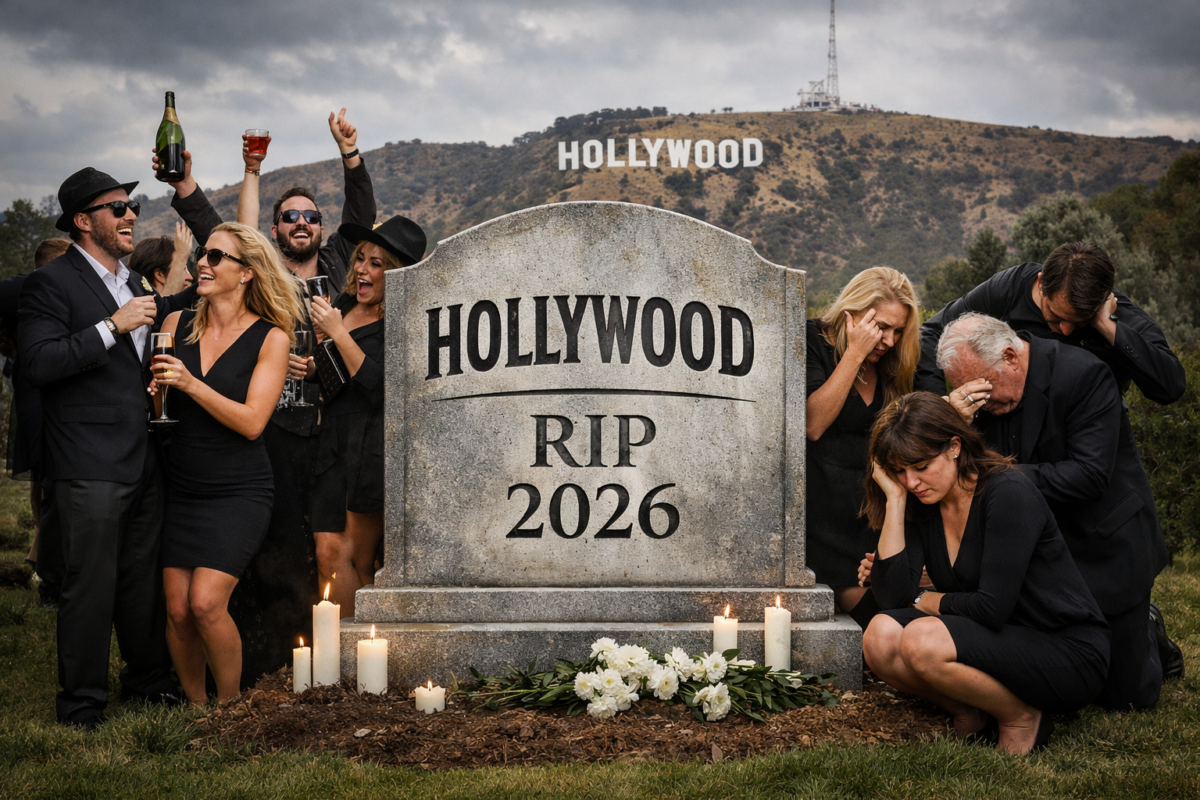
Hollywood, dear sweet Hollywood. You need to blink twice. You are in danger.
The past few years have yielded tepid slates of movies, followed by crazy digital pricing, and flat-out franchise destruction in the eyes of many fans. Star Wars and Star Trek, I am looking at you. There are entire generations of people who are nervously showing people where on the teddy bear their favorite franchises have touched them. I am one of them.
So we covered the insane pricing for digital goods, we covered the movie releases being unexciting, and finally, the fact that there are parties in the street that Kathleen Kennedy has stopped doing whatever it was she was doing to Star Wars. Yes, I did a little dance when I read that.
Let’s add to that some of the franchises that are putting out new content too fast for the franchise. I am seeing both “you should go see 28 Years Later: The Bone Temple” and “28 Years Later: The Bone Temple has mixed reviews.” With that much mixed signal, it was certainly not going to be a “first week must-see movie” of the kind that Hollywood needs to feed its financial beasts.
And wasn’t it like… March… that we just had an Avatar movie?
Why does this matter?
Because of Sprint, Verizon, T-Mobile, and ATnT in 2007.
Bear with me for a few minutes. Hold off on calling security. I will attempt to explain everything.
Once upon a time, you did not buy your mobile games from Apple and Google. They were put for sale inside your feature phones and charged to your carrier bill. This is one of the places I cut my teeth as a developer, and I had a great time shipping tons of cute little games and helping people with porting from one phone to another.
The carriers were not very good at managing games. They had around 500 games under management each year, and it made them very tired to deal with all of that. So one day, someone woke up and attempted to do some deep reasoning about their business.
They said, “We push out 500 games a year, but only 100 games a year are successful. So… Let’s just release 100 games a year!”
This coincidentally destroyed the whole middle tier of mobile game publishers, who were financed and staffed around getting 10 to 20 slots on a carrier deck for their digital goods. Suddenly, that would be 2 to 4 games.
For yours truly, I was at a mobile company doing a mix of contract work and self-publishing/co-publishing fun little games. We were succeeding with a 1 in 6 hit ratio.
If you divide that number by five, like the carriers did, then we would not break even as a business anymore, so we shut down our company.
Many people got out of mobile games at that point.
The carriers deciding to strangle their games business to death came at a perfect time for Google and Apple. The carriers taught people to play games on their phones, they gave developers an opportunity to make many fun little experiences and figure out how to work within constraints for the devices, and essentially created this massive unfulfilled need between these two groups of people who could not connect through experiences like they used to.
Two to three years after this massive self-inflicted content desert occurred, modern-day smartphones put out their own app stores and started filling the empty hole in people’s hearts and heads where mobile games used to live.
You might see a slight comparison—Hollywood is releasing fewer movies, making them more expensive, and generally taking fewer and fewer creative risks.
They have stopped feeding their audiences the right kind of content, the right amount of content, or the right price for that content.
Here comes my big fat LLM / AI comment.
Much like the carriers salted the earth for mobile games in many different ways, Hollywood is chasing away its fans and customers. They are poisoning the well with consumers, overcharging for windows that are too long, and failing to innovate on value creation.
So when we are all watching AI-generated micro-movies at home to pass the time because we do not want to see a Star Wars movie with Jared Leto in it, I am going to sigh and shrug.
Hollywood is not going to be taken out of business by AI-generated movies. It mostly has itself to blame for its own demise; Hollywood has been slowly strangling itself to death through all of the ways I have described above.
So what is to be done about it? Pretty much nothing, honestly. We will politely smile and nod as we get fewer and fewer big blockbusters and tentpole franchises out of incumbent media businesses. The death spiral has started. Anything they try to do now will be too little too late. By the time people get good at making movies with LLM technologies, we will be so starved for content that we will dive into new shows and formats with both feet.
On that note, I am going to go and check on Wicked: For Good pricing.
See you all again soon!
